From analyst-dependent
to customer-owned.
A platform-level UX initiative for Contify's market intelligence product, covering improvements across the app and starting with onboarding. During discovery, it became a strategic shift in how the entire platform relates to its users.
- Role
- Lead UX Designer
- Team
- +2 designers
- Year
- 2025, ongoing
- About
- What is Contify?
The brief was platform UX.
The insight was ownership.
Contify wanted broad UX improvements, starting with onboarding. During discovery, a pattern emerged that reframed the entire initiative: customers depended on analysts not just to get started, but throughout their journey. The product was complex enough that using it without analyst support was impractical, so the platform had effectively been built around the assumption that an analyst would always be nearby.
The goal shifted. Not to redesign a flow, but to move the platform toward genuine customer ownership so users could configure, understand, and manage their intelligence programs on their own.
I proposed this reframe to leadership. The CEO and leadership team responded positively and the initiative was scoped accordingly.
Led the initiative.
Designed the hardest part.
Driving the strategy while staying hands-on with the most complex part kept the decisions grounded. Designing the actual onboarding flow kept the ownership idea honest, because it had to work as a real screen, not just a direction on a slide.
From 1 week
to under 2 hours.
The old process averaged about a week before a customer could start: an analyst meeting, scoping, internal configuration, and a demo. The trial clock only started after all of that, so getting going was slow and entirely analyst-led. Self-serve setup brings it down to under two hours.
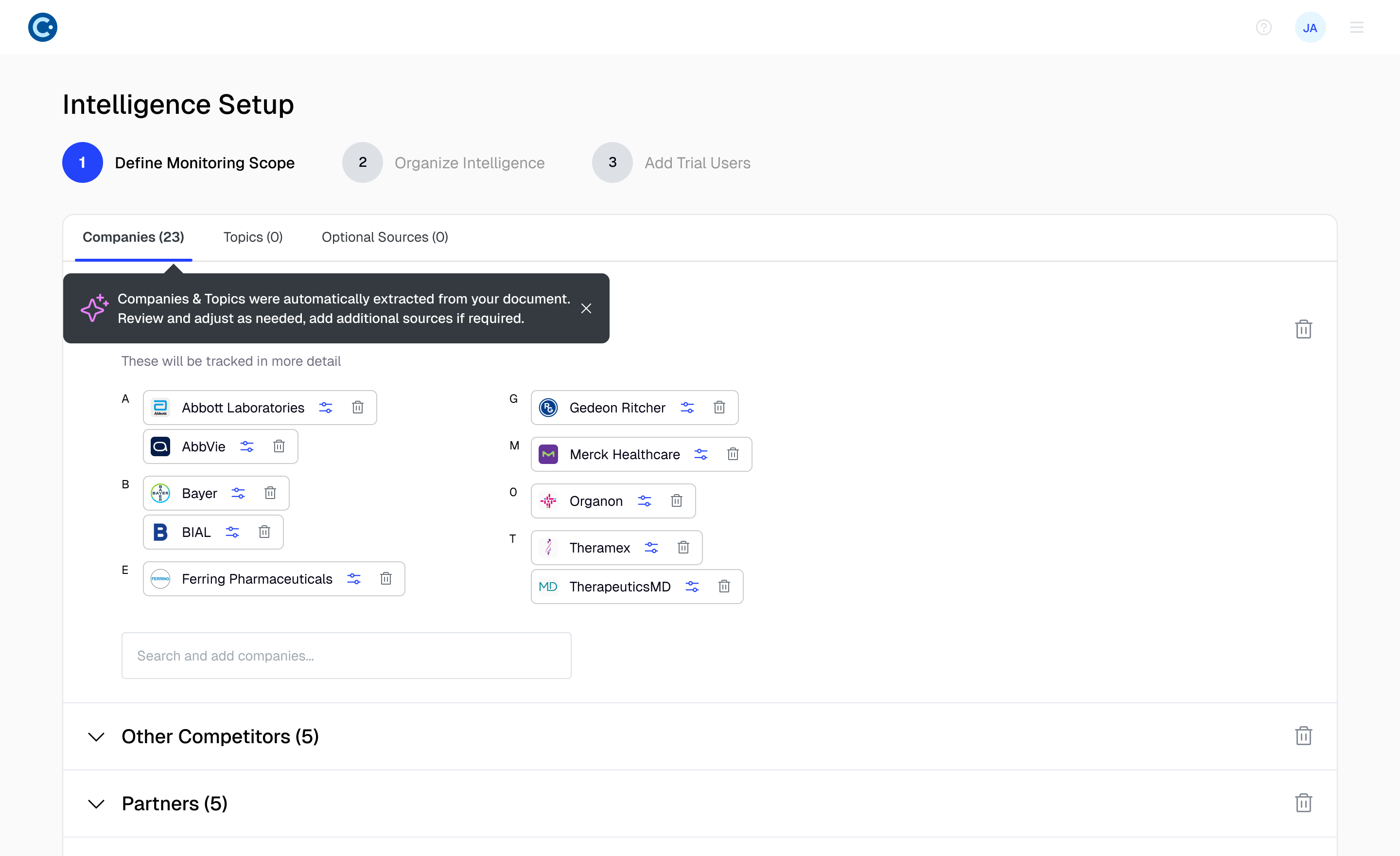
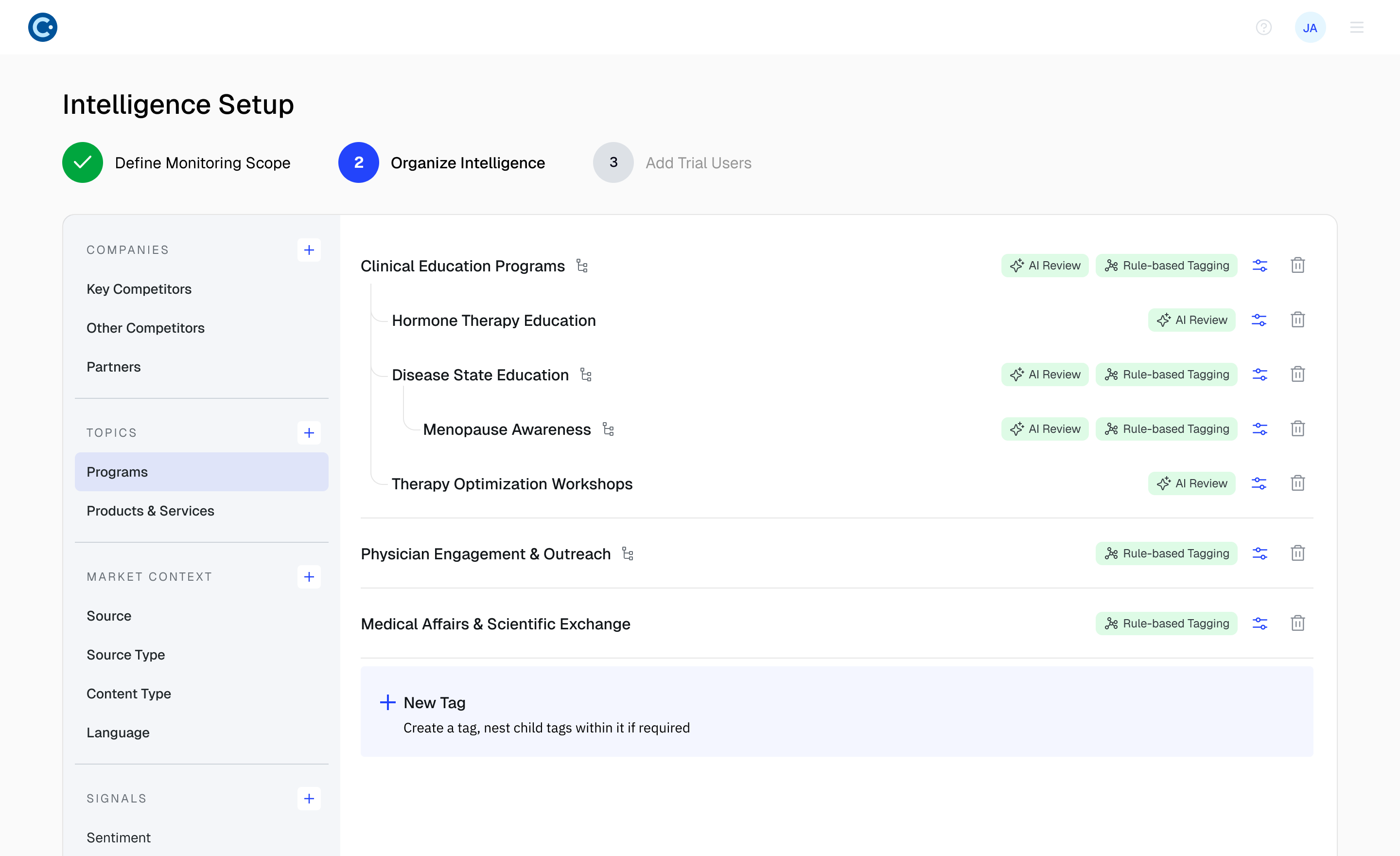
The setup wizard moves through three steps: define the monitoring scope (companies, competitors, and topics), organize the intelligence into tags and taxonomy, and add teams and users. Sources attach to companies and topics, so users can set them during onboarding or come back to them later.
The flow leans on AI to do most of the heavy lifting. Inputs are extracted automatically from a document the user provides, and tags are created from what they enter in the first step. Most of the user's job is reviewing what has been populated and adjusting or adding where needed, rather than building everything from a blank screen.
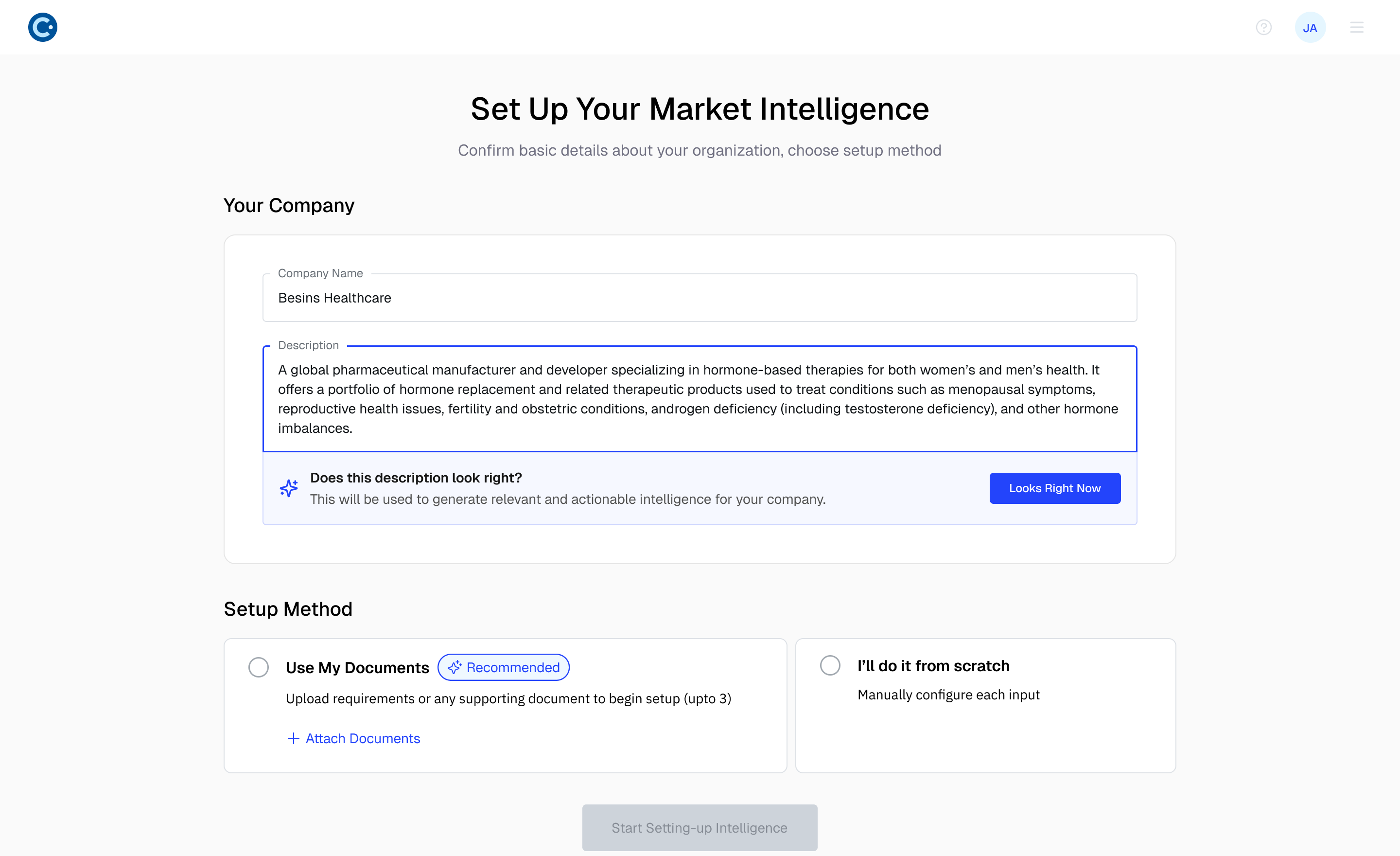
Tested with analysts, sales teams, and real end users. They found the new setup easier to understand and quicker to move through than the old process.
The same ownership principle is moving into the rest of the platform: navigation, dashboards, and rule-building. Rule-writing is the clearest example. It was painful enough that even analysts struggled with it, which made it impossible for most customers. The redesign simplifies it to the point where users can write their own rules, removing one of the last places they had to depend on an analyst.