Designing healthcare from both sides.
A patient app for HCAH's healthcare-at-home service, and Drona, a clinic management platform for doctors at Mankind Pharma. Two healthcare products from two different points in my career, built for opposite users: the people receiving care, and the people delivering it.
- Role
- UX Designer
- Timeline
- 2019 – 2023
- Clients
- HCAH, Drona Health (Mankind Pharma)
- Audience
- Patients & clinic teams
Two different users, one domain.
Both products are healthcare, built for opposite ends of the same system. HCAH served patients managing care at home. Drona served the clinic: doctors, managers, assistants, and receptionists. I worked on these years apart at different companies, but together they shaped how I think about designing for healthcare.
Supporting patients at home.
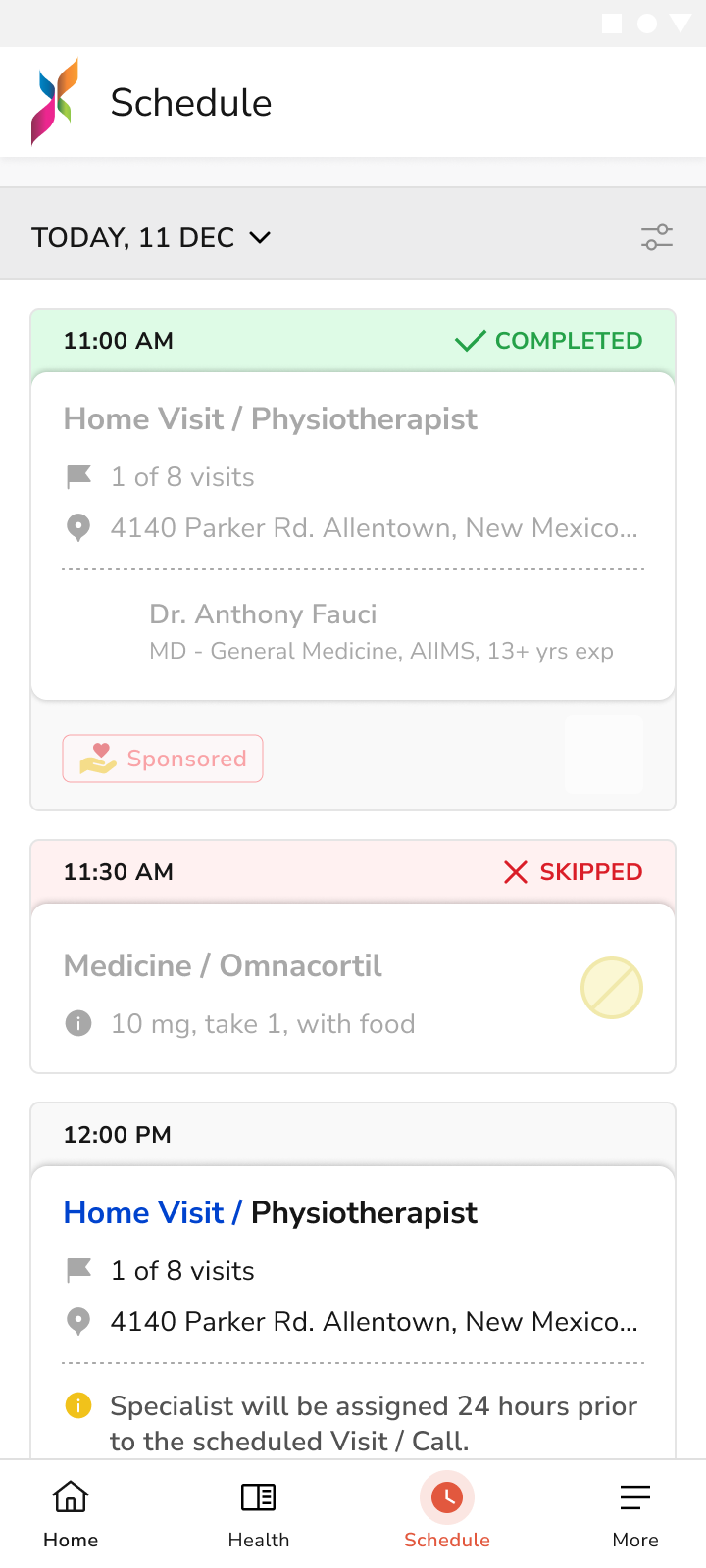
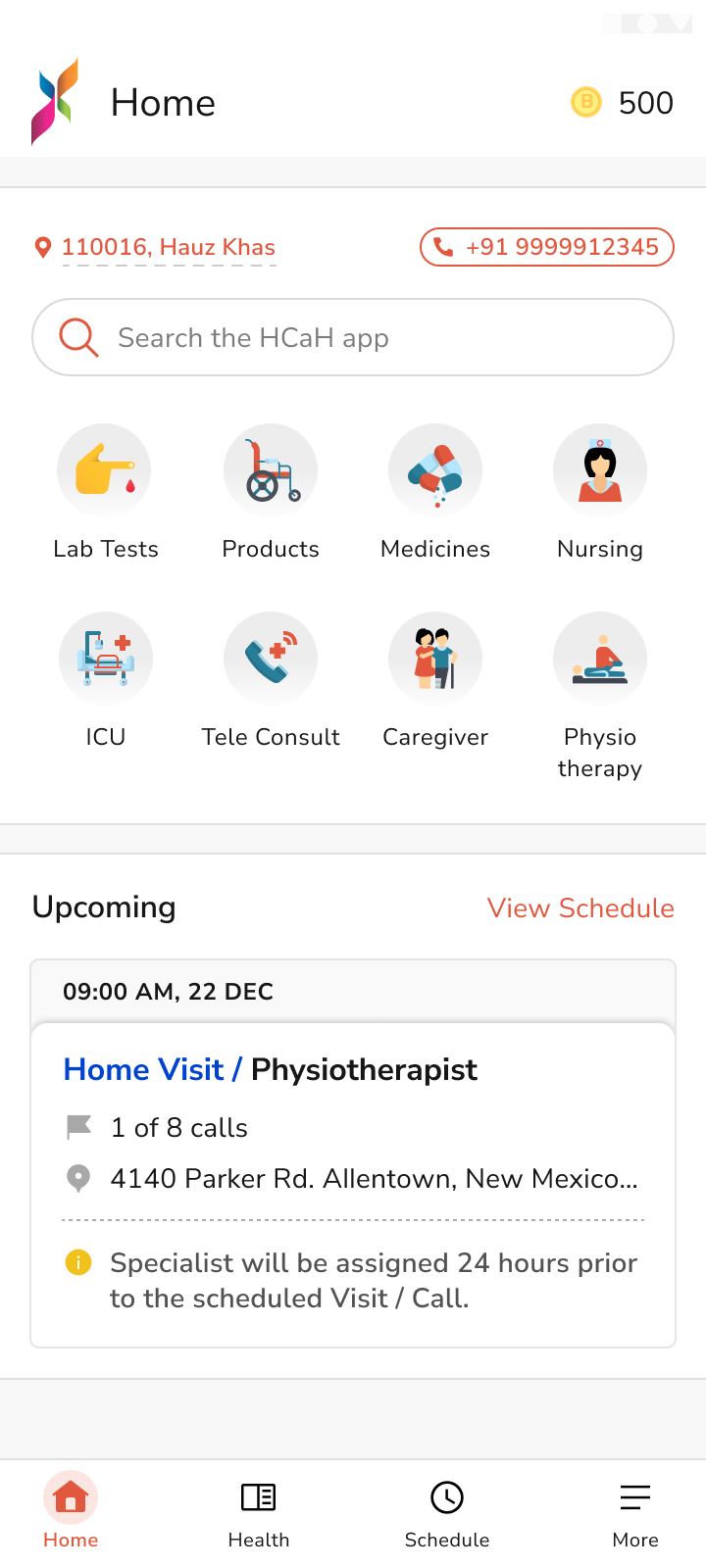
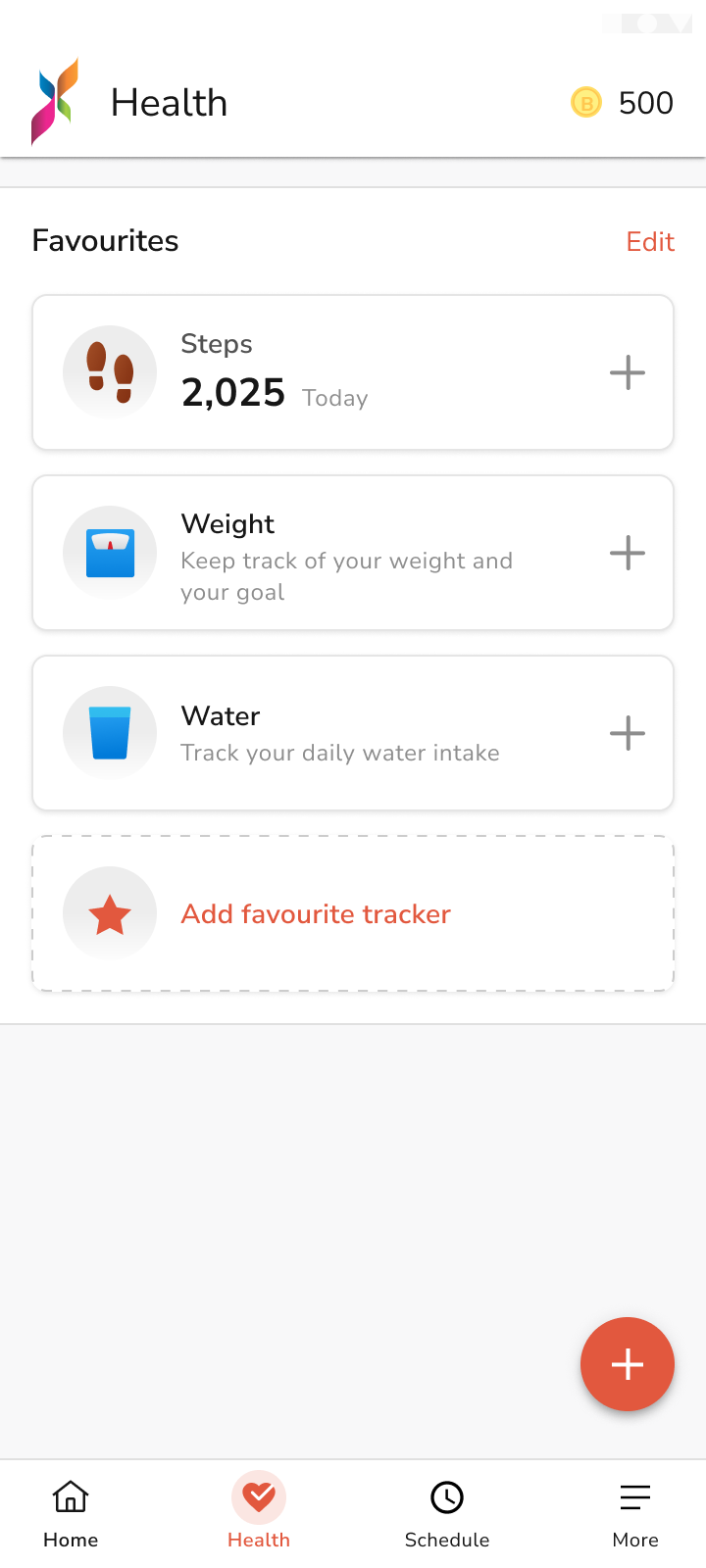
HCAH provides healthcare-at-home services: home visits, physiotherapy, teleconsultations, medicines, diagnostics, and caregiver support. I designed parts of the patient app at Framebit Studios. People using it were managing recovery or ongoing care at home, often with a family member helping. The app needed to be calm and easy to scan: open it and see at a glance what was scheduled, what was done, and what needed attention.
Supporting doctors in practice.
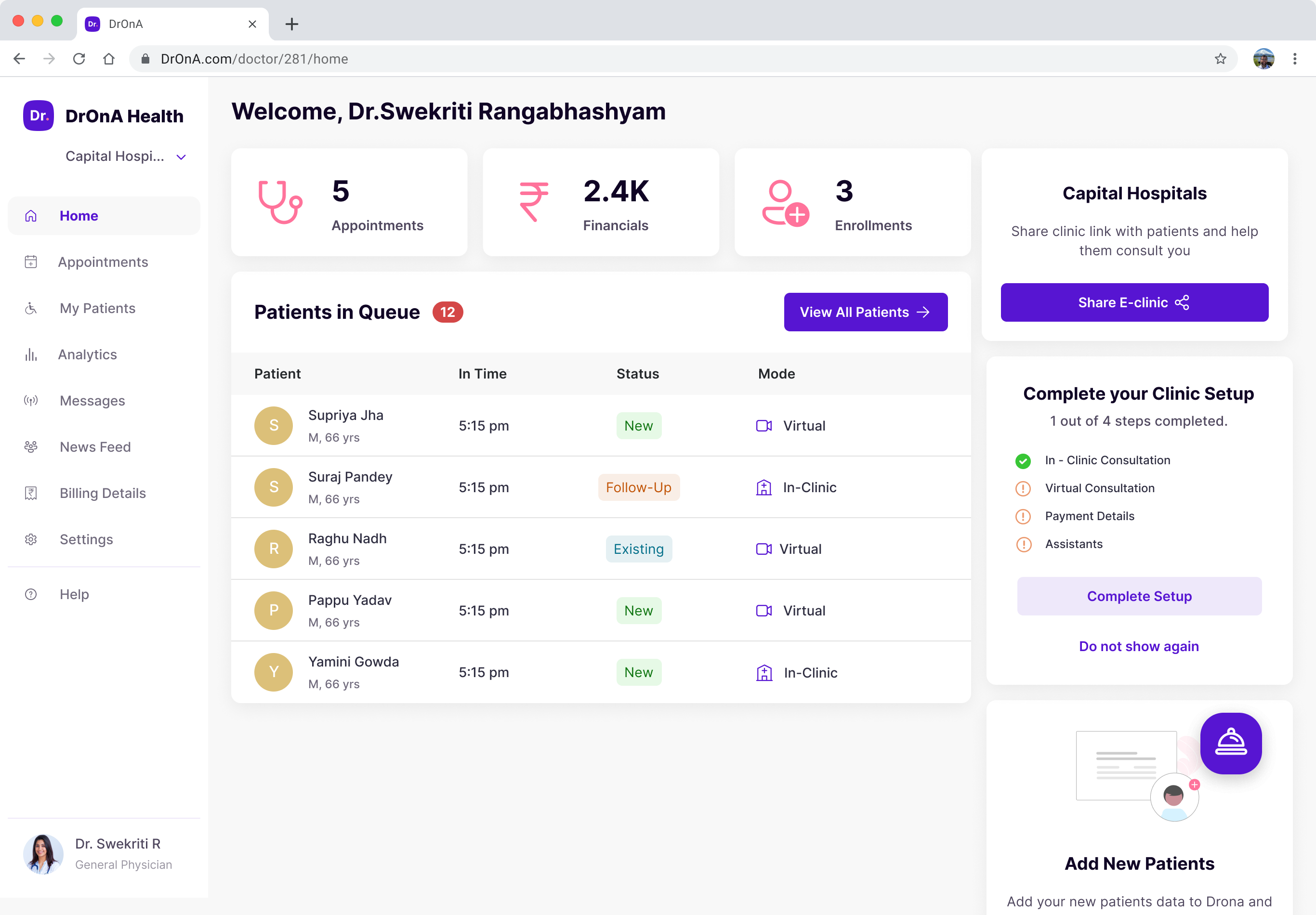
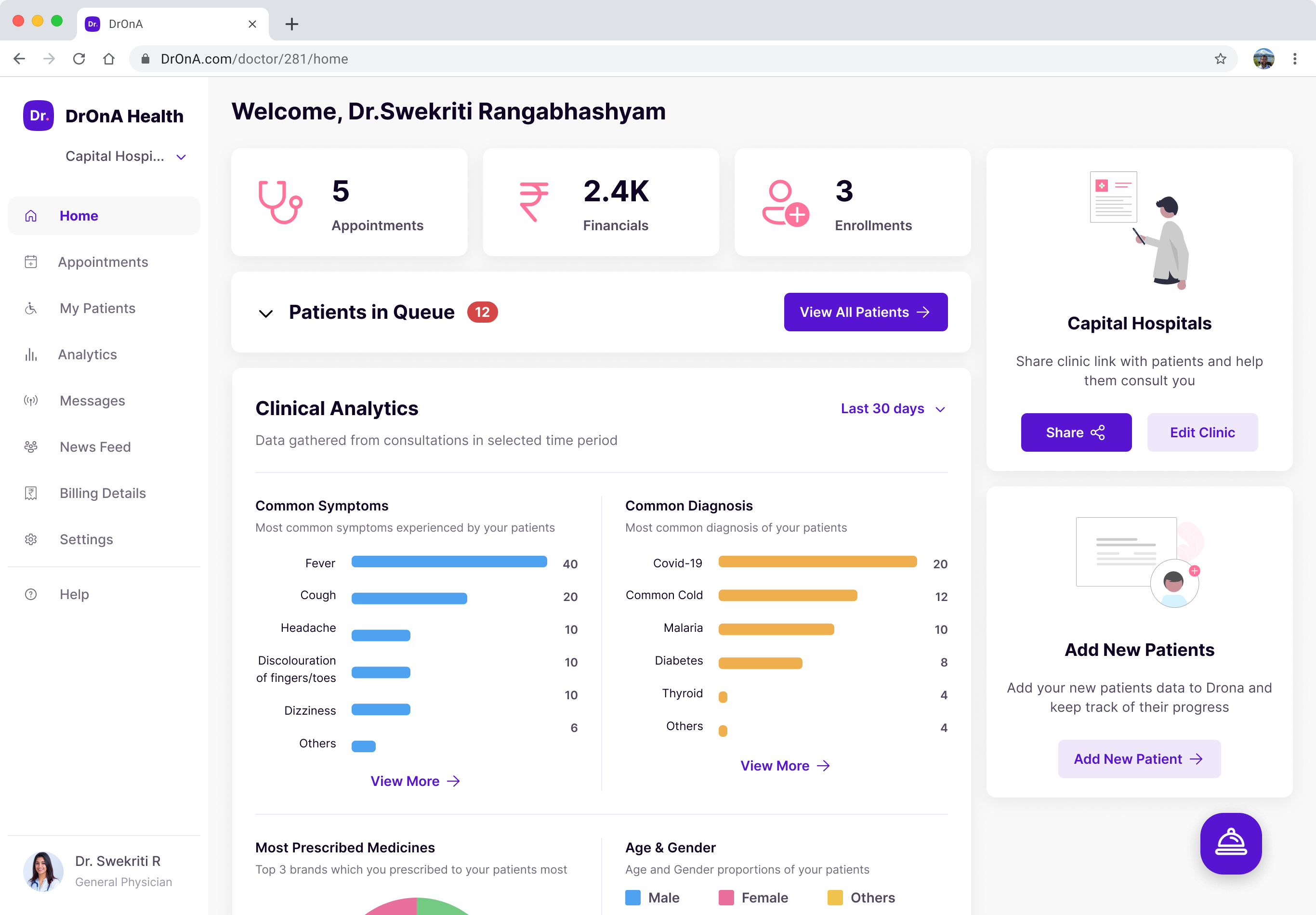
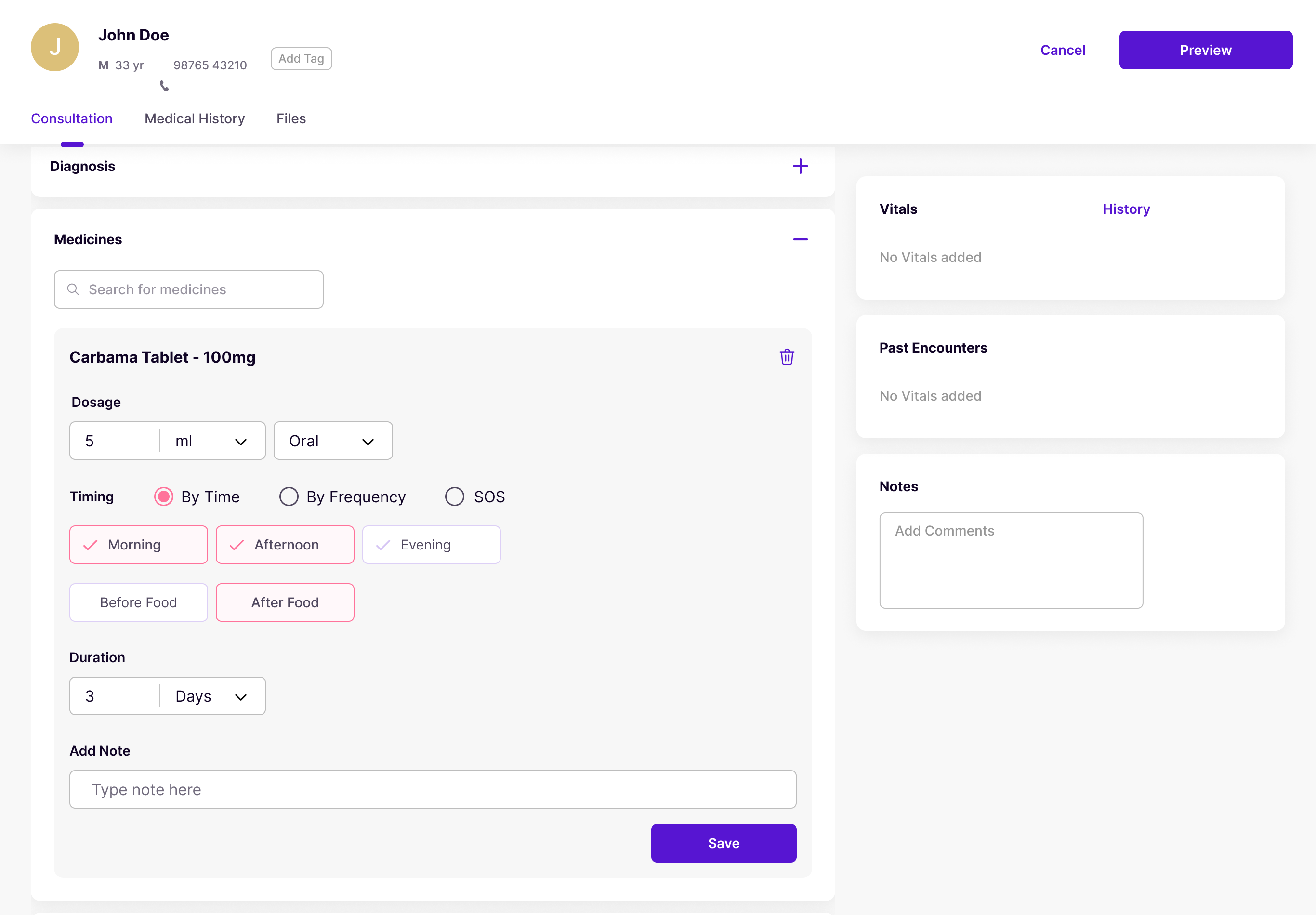
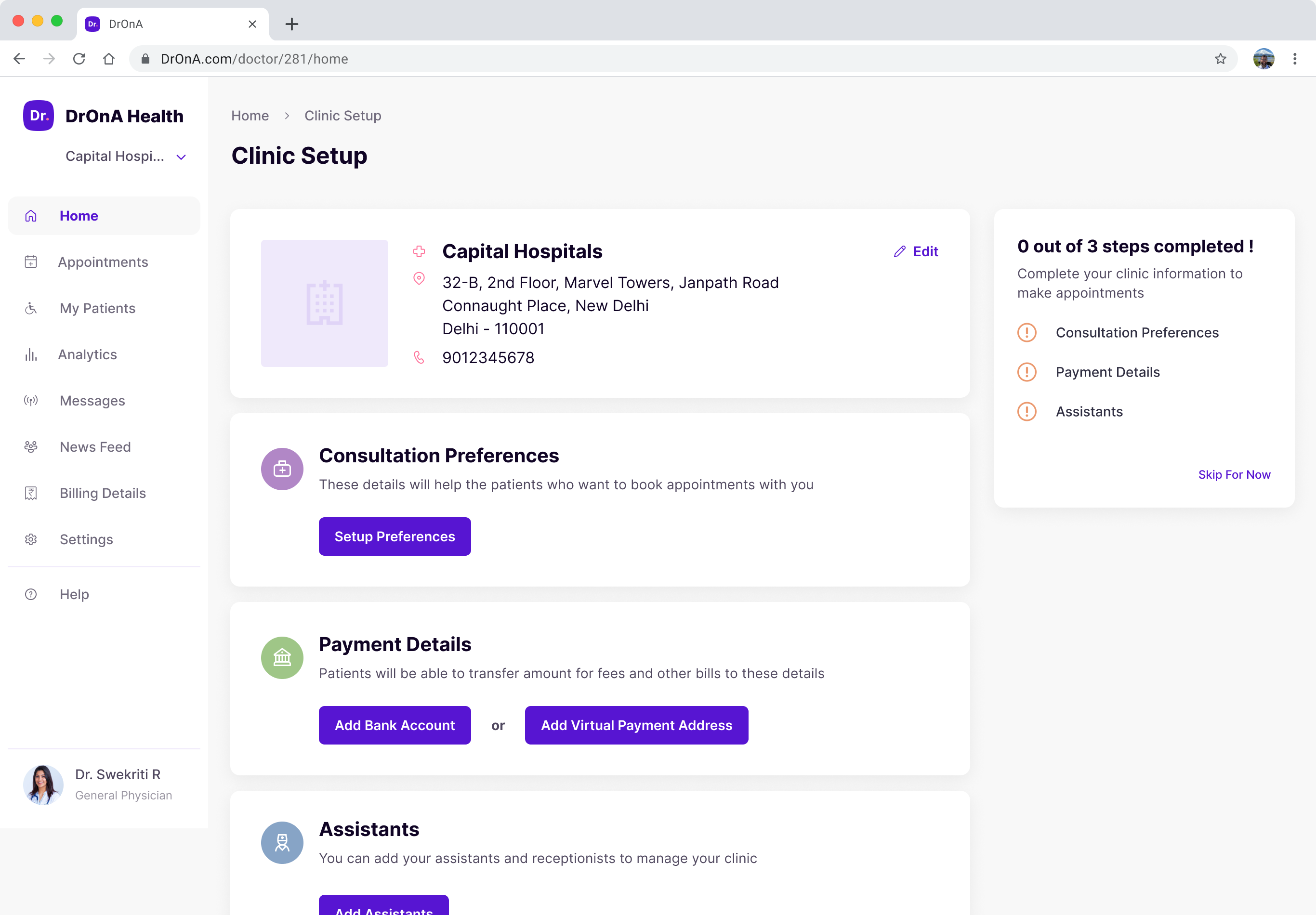
Drona is a clinic and patient management platform built for Mankind Pharma, designed at The Geeks Lab. Doctors used it during consultations; clinic staff used it to keep the practice running. I designed major modules across appointments, patient management, consultations, prescriptions, and telemedicine, and managed my first direct report on this project. Density and speed were the priority: a lot had to be visible at once, with a quick path from one patient to the next.
What this work meant to me.
Working on both products is what drew me to healthcare. These tools sit inside moments that matter, for patients and for the people treating them.
Seeing that from both sides, as the person receiving care and as the person delivering it, is what made me want to keep solving hard problems in this industry.